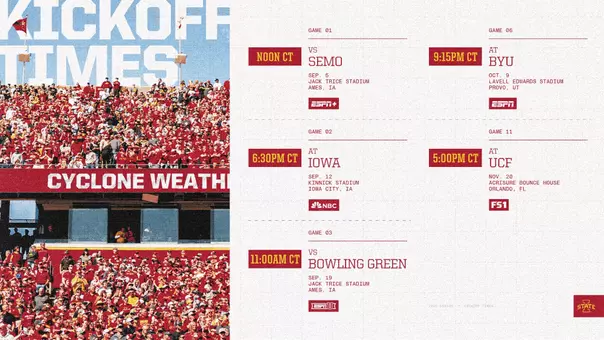
Upcoming Event: Football versus Southeast Missouri on September 5, 2026 at Noon


07.20.2009 | Football
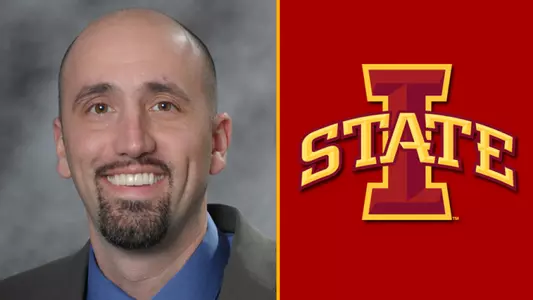
AMES, Iowa ? Iowa State director of football operations Brian Schwartze knows all about recruiting. As vice president of player personnel and football operations for the Chicago Rush of the Arena Football League the past four seasons before coming to Ames, Schwartze actively recruited players for the Windy City team. While not exactly the type of recruiting that college coaches do as part of their jobs, nevertheless it was a year-round challenge to find players to keep the Rush among the AFL's best teams.
Ironically, it was the collegiate recruiting process that was the catalyst for Schwartze's return to Iowa as a member of Paul Rhoads' first Iowa State coaching staff.
“When I was an assistant coach at Northwest Missouri State, I recruited St. Louis,” Schwartze said. “Paul was recruiting St. Louis for Iowa State. We got to know each other and when the AFL's future was not looking good last year, we hooked up in January.”
Schwartze spent two years in af2 with the Quad City Steamwheelers (2000-01) before two years (2002-03) with the New Jersey/Las Vegas Gladiators as defensive coordinator. He looks back at the demise of the AFL from his own perspective.
“Chicago was a great experience,” Schwartze said. “Allstate Arena was 99 percent full for each game. The AFL had aspirations of being the fifth major sport. The league grew until there were offices in Los Angeles, Chicago and New York. Soon some players were making more than $100,000 and the overhead, including insurance obligations could not be sustained.”
Schwartze never missed the playoffs in nine years of arena ball coaching, including the Rush's run to the 2006 AFL crown and af2 Arena Cup titles in the Quad Cities. He knows first hand the contrasts between the AFL and af2.
“The biggest difference in the two leagues was probably the linemen.” Schwartze said. “It was harder to find linemen than the so-called ?skill position' players.”
Schwartze said the best NFL quarterback was not necessarily the best AFL signal-caller.
“The field is much smaller so you don't need a guy who could rifle the ball 50 yards,” Schwartze said. “You needed someone smart who could throw a catchable ball and make quick decisions because a QB had to unload the football sooner after the snap than he would in an NFL game.”
Schwartze maintained a “Hot List” of possible players to pursue and watched the NFL's cut list every day.
“You could recruit younger players on the possibility of using AFL as a developmental experience that could give them exposure to the NFL,” Schwartze said. “But you had to work with agents and sell people on the league and choose your words carefully. Ultimately, there was no shortage of players.”